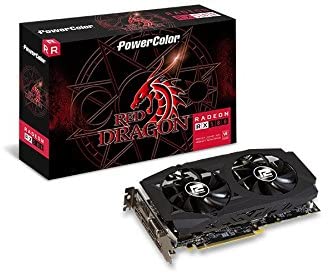
It features 2304 shading units, 144 texture mapping units, and 32 ROPs. AMD has paired 8 GB GDDR5 memory with the Radeon RX 580, which are connected using a 256-bit memory interface. The GPU is operating at a frequency of 1257 MHz, which can be boosted up to 1340 MHz, memory is running at 2000 MHz (8 Gbps effective).
Rx 470
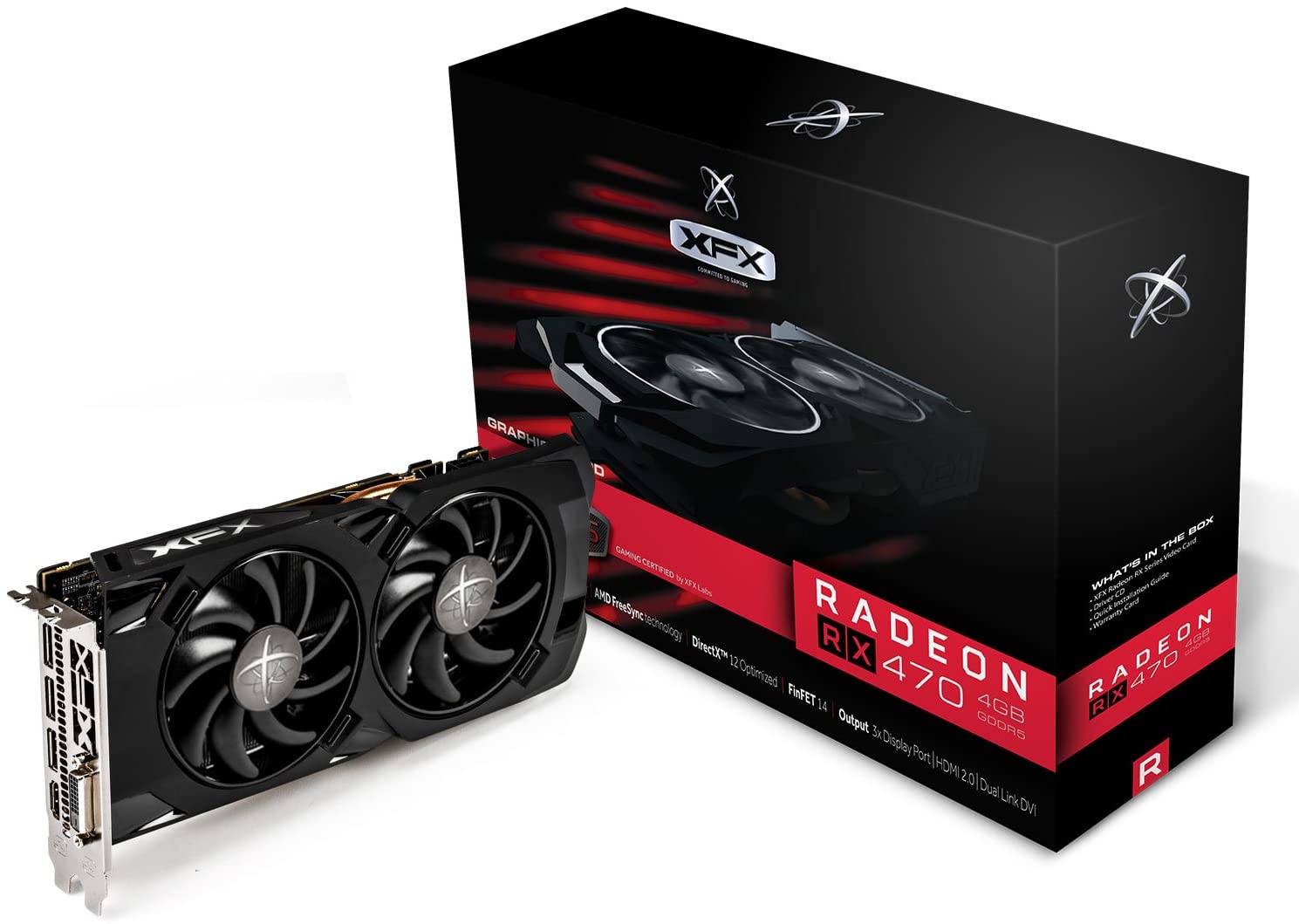
The AMD Radeon RX 470 is a mainstream graphics card for desktop PCs. It was announced in August 2016 and is based on the Polaris 10 chip, just like its bigger sibling Radeon RX 480. The GPU does, however, only use 2048 shader units (32 CUs, 128 TMUs) from 2304 (36 CUs, 144 TMUs). The clocks at 926 – 1206 MHz for the core as well as 1650 MHz for 4 or 8 GB GDDR5-VRAM (256-bit interface) are a bit lower as well.
As a result of the reduced hardware equipment, the RX 470 is about 10 percent slower than the RX 480 and just manages the performance level of the Nvidia GeForce GTX 970. Modern games from 2016 can usually be played in the Full-HD resolution and the highest settings.
The TDP of the Radeon RX 470 is specified with 120 Watts by AMD, so a single 6-pin power connector is sufficient.
Nvdia GTX 1050ti
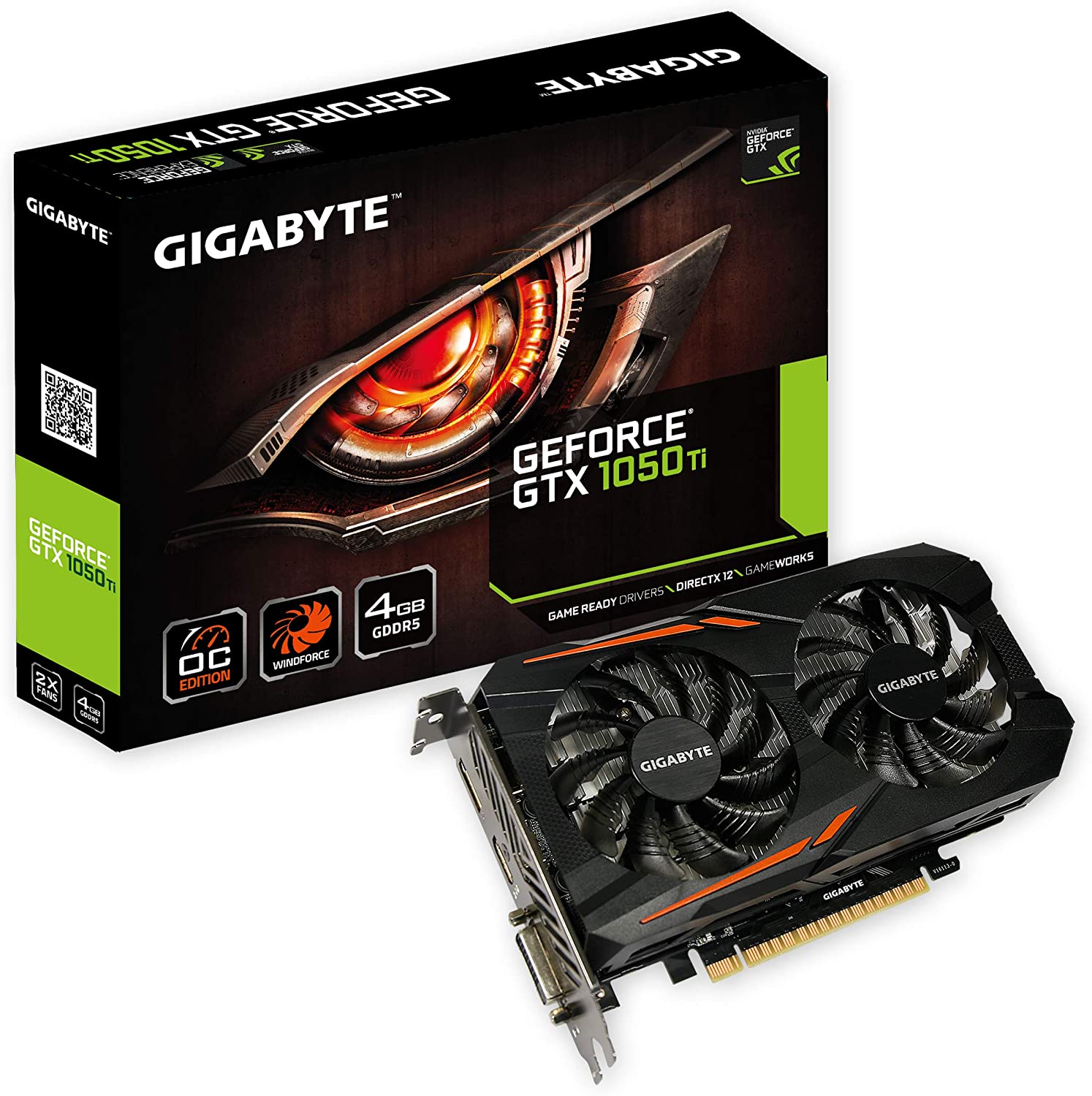
It features 768 shading units, 48 texture mapping units, and 32 ROPs. NVIDIA has paired 4 GB GDDR5 memory with the GeForce GTX 1050 Ti, which are connected using a 128-bit memory interface.
When shopping for the best gaming CPU, you’ll want to balance performance and features with your PC budget. My picks below will help you choose the best CPU for gaming. You can also see how all of these processors stack up in our CPU Benchmarks.
Here are the best budget gaming CPUs:
i5-9400F
Boasting six cores and six threads, the Core i5-9400F processor from Intel has a 2.9 GHz base clock speed and a 4.1 GHz maximum boost speed. Compatible with LGA 1151 motherboard sockets, this 9th-generation Core i5 CPU has a 9MB Intel Smart Cache and supports DDR4-2666 memory, and it also supports Intel Optane memory. This F-series processor lacks an integrated graphics core, meaning you’ll need to use it with a discrete graphics card. A CPU cooler is included.
i3-9100F
The Core i3-9100F 3.6 GHz Quad-Core LGA 1151 Processor from Intel has a base clock speed of 3.6 GHz and comes with features such as Intel Optane Memory support, Intel VT-x virtualization technology, Intel VT-d virtualization technology for directed I/O, and Intel VT-X. This processor features a boost speed of up to 4.2 GHz. Additionally, there are 4 cores with 4 threads in an LGA 1151 socket, has 6MB of Intel Smart Cache, and support for up to 16 PCIe 3.0 lanes. Having 4 cores allows the processor to run multiple programs simultaneously without slowing down the system, while the 4 threads allow a basic ordered sequence of instructions to be passed through or processed by a single CPU core. This processor also supports up to 64GB of 2400 MHz DDR4 ECC or non-ECC RAM and utilizes 9th-generation technology.
Graphically, the Core i3-9100F does not contain any integrated graphics, which means that users will need to purchase a compatible dedicated GPU of their choice.
Intel Pentium Gold G5400
Only compatible with Intel’s 300 series chipset-based motherboards, the Pentium G5400 3.7 GHz Dual-Core LGA 1151 Processor from Intel has a base clock speed of 3.7 GHz and comes with features such as AES-NI encryption and Intel VT-d virtualization technology for directed I/O. Additionally, this processor features 2 cores with 4 threads in an LGA 1151 socket, has 4MB of cache memory, and 16 PCIe lanes. Having 2 cores allows the processor to run multiple programs simultaneously without slowing down the system, while the 4 threads allow a basic ordered sequence of instructions to be passed through or processed by a single CPU core. This processor also supports dual-channel DDR4-2400 RAM and utilizes 8th Generation (Coffee Lake-S) technology.
Graphically, the Pentium G5400 uses the integrated Intel UHD Graphics 610 chipset, which has a dynamic frequency of 1050 MHz. This processor is not unlocked and does not feature an overclock speed.
AMD Athlon 200ge
Athlon 200GE is a 64-bit dual-core low-end performance x86 desktop microprocessor introduced by AMD in late 2018. This processor is based on AMD’s Zen microarchitecture and is fabricated on a 14 nm process. The 200GE operates at a base frequency of 3.2 GHz with a TDP of 35 W. This MPU supports up to 64 GiB of dual-channel DDR4-2666 memory and incorporates Radeon Vega 3 Graphics operating at 1 GHz.


 John Tech Tips (JTT)